

 Send Inquiry


 Send Inquiry
INDUS FIRE EXTINGUISHER
Price 500 INR/ Unit
MOQ : 100 Units
INDUS FIRE EXTINGUISHER Specification
- Usage
- Fire Fighting
- Material
- Metal
- Product Type
- INDUS FIRE EXTINGUISHER
- Color
- Red
INDUS FIRE EXTINGUISHER Trade Information
- Minimum Order Quantity
- 100 Units
- FOB Port
- VADODARA
- Supply Ability
- 1000 Units Per Day
- Delivery Time
- 10 Hours
- Main Domestic Market
- Gujarat
About INDUS FIRE EXTINGUISHER
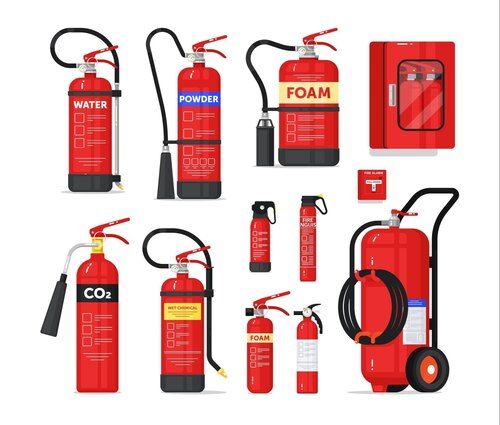
Fire extinguishers are essential safety devices used to control or put out small fires. They come in various types, each suited to different types of fires. Here's a brief overview of the main types and their uses:
Types of Fire Extinguishers
Water Fire Extinguishers
Use: Class A fires (ordinary combustibles like wood, paper, and cloth).
Not Suitable For: Class B (flammable liquids), Class C (electrical), Class D (metal), or Class K (cooking oils) fires.
Foam Fire Extinguishers
Use: Class A and Class B fires (flammable liquids like gasoline and oil).
Function: Forms a blanket over the fire to cut off the oxygen supply and cool the burning material.
Dry Powder Fire Extinguishers
Use: Class A, B, and C fires (flammable gases, electrical fires).
Function: Disrupts the chemical reaction of the fire and smothers it. Suitable for use on electrical fires.
Carbon Dioxide (CO2) Fire Extinguishers
Use: Class B and C fires.
Function: Displaces oxygen and cools the fire. Effective on electrical fires and flammable liquids.
Wet Chemical Fire Extinguishers
Use: Class K fires (cooking oils and fats).
Function: Creates a soapy layer on top of the fire, cooling it and preventing re-ignition.
Fire Extinguisher Classes
Class A: Fires involving ordinary combustibles like wood, paper, and cloth.
Class B: Fires involving flammable liquids like gasoline, oil, and paints.
Class C: Electrical fires involving appliances, wiring, and other electrical equipment.
Class D: Fires involving combustible metals such as magnesium, titanium, and sodium.
Class K: Fires involving cooking oils and fats (typically in commercial kitchens).
Choosing the Right Fire Extinguisher
Assess the Risk: Determine the types of fires likely in your environment and select extinguishers accordingly.
Location: Place extinguishers in accessible areas, especially near potential fire hazards.
Maintenance: Regularly check and maintain extinguishers to ensure they are operational.
Usage Tips
PASS Technique:
Pull the pin to break the seal.
Aim the nozzle at the base of the fire.
Squeeze the handle to release the extinguishing agent.
Sweep the nozzle from side to side to cover the fire.
Understanding the type of fire extinguisher and its appropriate use is crucial for effective fire safety. Regular training and drills can also ensure preparedness in case of a fire emergency.
Tell us about your requirement

Price:
Quantity
Select Unit
- 50
- 100
- 200
- 250
- 500
- 1000+
Additional detail
Mobile number
Email


We requires minimum 10 lakh order value leads.
Contact Details

- Block 501, Opposite Gsfc Main Gate, Dashrath,Vadodara - 391750, Gujarat, India
- Phone : 08045813895
Indus Fire Safety Pvt. Ltd.
GST : 24AADCI2182H1ZS
GST : 24AADCI2182H1ZS

- Mr Sujith Menon (Director)
- Mobile : 08045813895
- iev.sales@indusfire.com
 Send Inquiry
 Send SMS
Indus Fire Safety Pvt. Ltd.
All Rights Reserved.(Terms of Use)
Developed and Managed by Infocom Network Private Limited.
Developed and Managed by Infocom Network Private Limited.

